Lake House Library

Back in September I wrote this post on curating the perfect beach house library.

Well, another month, another season and another friend’s renovation project (my friends are big into tearing down walls!) has just wrapped up.  This was a special project in that it’s a house I practically grew up in, owned by a woman who had a huge role in shaping the person I am today.  The house is completely changed – all for the better – and this friend, too, is planning to dedicate an entire room to books.  While a beach house is obviously a place for summer reading – the lake house has always made me think of Fall and changing leaves and the romance (though not the practicalities!) of a wood burning stove.

This is definitely the library for large, heavy hardcover door-stopper novels.   And knowing the tastes of the people who’ll be using it, it’s also a place where I imagine edge worn sci-fi paperbacks by Jack Vance & Fritz Leiber side-by-side with contemporary examples of narrative non-fiction.  A whole row of cookbooks and a stack of…. enough.   Let’s do this right.

  • A subscription to The New York Review of Books – perfect for Saturday morning reading between sips of coffee.

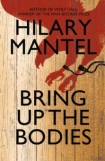
  • Hilary Mantel’s Wolf Hall & Bring Up the Bodies for all the obvious reasons.
  • The Complete Annotated Short Stories of Sherlock Holmes (W.W. Norton) – They’re huge, unwieldy and don’t make for the most comfortable reading, but I’m partial to the annotated volumes in this boxed set.

  • Jack Vance, Fritz Leiber, Douglas Adams and that guy who wrote the Conan the Barbarian series – classic American sci-fi and fantasy.  I always feel nostalgic in the Fall.
  • Murakami – not 1Q84 so much, though I don’t rule it out of hand.  I’m thinking of his earlier books with their themes of isolation and loss.
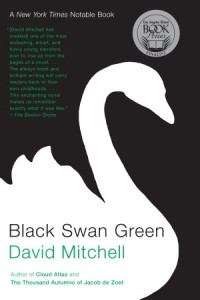
  • I know Cloud Atlas is EVERYWHERE at the moment so I won’t insult you by recommending it. A novel by David Mitchell is perfect for this (or really any) time of year.   I wonder if they were written while the leaves changed color?  The Thousand Autumns of Jacob de Zoet or Black Swan Green… reader’s choice. 
  • The Hangman’s Daughter mystery series from Germany – decidedly middle-brow, but well done and a lot of fun for all that
  • I still haven’t discovered cookbooks I like better than The Canal House Cookbook series.  New books come out twice a year.  An added (and, admittedly, obvious) benefit is that you can read them while cooking up a fabulously delicious meal.

  • Autobiography of Mark Twain, Volume One should have a permanent spot on the table next to your favorite reading chair.  Just waiting for you to dip into on a long, cold night.  A cat and a snifter of brandy is recommended but completely optional.
  • Any book from the collection of authors born out of the imagination of the French author Antoine Volodine.  I’ll be reviewing We Monks & Soldiers by Lutz Bassmann later this week. Atmospheric and strange and more than a little bit creepy.


Do you have a favorite book for this time of year?  Something you recommend for when the nights begin to turn cold?

Add to FacebookAdd to DiggAdd to Del.icio.usAdd to StumbleuponAdd to RedditAdd to BlinklistAdd to TwitterAdd to TechnoratiAdd to Yahoo BuzzAdd to Newsvine

The Miracle Cures of Dr. Aira by César Aira (Katherine Silver, translator)

César Aira is 63 years old.  He has been, and continues to be, insanely prolific.  Yet out of the 60+ books published in Spanish only eight have made their way into English.  New Directions has brought out approximately one a year since 2006.  The year 2012 was a banner one for Aira in the States – Varamo, a short story in The New Yorker and – this October – The Miracle Cures of Dr. Aira.

Dr. Aira works miracles – he’s a kind of faith healer – who for years has been pursued by his arch-nemesis Dr. Actyn.  Actyn will stop at nothing to expose Aira as a fraud.  He goes so far as to create absurd scenarios, elaborate “candid camera” sets, in the hopes of tricking Dr. Aira into unwittingly performing on camera.

Of course they were hoping to see the exotic and picturesque part of the operation, the grotesque magical ritual, the touch of the ridiculous that they would know how to draw attention to, the blunder they would publicize in the tabloids, the failure.

The Miracle Cures… opens with Dr. Aira being intercepted by an ambulance on an evening stroll.  Two doctors jump out claiming to have been looking for him and begging for his help to save a man’s life.  The entire scene reads like a vaudeville comedy routine.  Of course no one, least of all the Doctor, is taken in.

Dr. Aira betrays a fear of misstepping, of committing a faux pas (past ones haunt him), of never living down the embarrassment caused by some blunder he might make.  He talks about how faith healing used to be easier, perhaps because people were more faithful or perhaps because cameras weren’t as ubiquitous.   These days he just wants to write, to publish in installments his The Miracle Cures complete with diagrams and illustrations.  He imagines it being released in a series of slim, hardcover books.  So when two wealthy businessmen seeking his miracle cure for their brother approach him, he acquiesces quickly – almost too quickly  – his usual guards lowered.  Not out of greed.  But in the hopes of seeing his books (which he intends to give away, free to all) published in a format he could never otherwise afford.

Aira’s (the author, not the doctor) characters have a tendency to travel through environments.  The young heroine in Ghosts walks through the structural steel skeleton of the apartment building on which she and her family live.  Rugendas in An Episode in the Life of a Landscape Painter traverses the Argentine countryside on horseback.  Varamo walks us across Panama and The Seamstress and the Wind (which I own, but haven’t read yet) is one long, madcap roadtrip.  These men and women stumble into moments of import, or those moments stumble upon them.  In this vein there are two true events in The Miracle Cures of Dr. Aira.  Inside of the ambulance and in the room where he performs his miracle cure upon the dying businessman.  The prose between these two scenes rambles, stream of conscious style and seems to have no focus.  Aira (the author) is tricky, though.  He uses those ramblings to define the event/the scene/the action like an artist uses negative space to define an object on a canvas.  It’s just one of the things that I love about his writing.

César Aira writes sophisticated and tightly plotted books of modest size, filled with philosophical digressions.

Even for people who lead a routine life without incident, for those who are sedentary and methodical, who have renounced adventure and planned their future, a colossal surprise is waiting in the wings, one that will take place when the moment arises and force them to start over again on a different basis.  That surprise consists of the discovery that they are, in reality, one thing or another; in other words, that they embody one human type – for example, a Miser, or a Genius, or a Believer, or anything else – a type that until then they have only known through portrayals in books, portrayals they’ve never truly taken seriously, and in any case have never seriously considered applying to reality.  This revelation is inevitable at a certain point in life, and the upheaval it creates (gaping mouth, wide eyes, stupor), the sensation of a personal End of the World, of “the thing I most feared is happening to me,” is tailor-made to the frivolity of everything that preceded it.

Dr. Aira eventually performs his miracle cure for the reader, overcoming his fear of entrapment, public humiliation and subsequent shame.  Aira creates a frenetic masterpiece on these pages – the Doctor’s manic movements matched by the racing of his thought processes.  Dr. Aira realizes that to save the man’s life he much reshape both his patient’s history and present reality.  The description of how he does this is marvelous.  And the result, an ending which leaves the reader with a choice I thought reminiscent of “The lady, or the tiger?” is brilliantly executed.

I’m not sure what’s left to say?  Other than something I remembered while reading this book.  It was a response by the author Robin McKinley to fans who were unhappy with the ending to one of her novels – Sunshine (great book, by the way).  It ended on a cliffhanger, and everyone familiar with her work knows McKinley doesn’t write sequels.  To paraphrase, she said she got them  and they had no right to complain because she’d done it fair & square.  It occurred to me on finishing The Miracle Cures of Dr. Aira that I had been fairly got.  And I’ve absolutely no complaints about it at all.

Publisher:  New Directions, New York (2012)
ISBN:  978 0 8112 1999 0

Add to FacebookAdd to DiggAdd to Del.icio.usAdd to StumbleuponAdd to RedditAdd to BlinklistAdd to TwitterAdd to TechnoratiAdd to Yahoo BuzzAdd to Newsvine